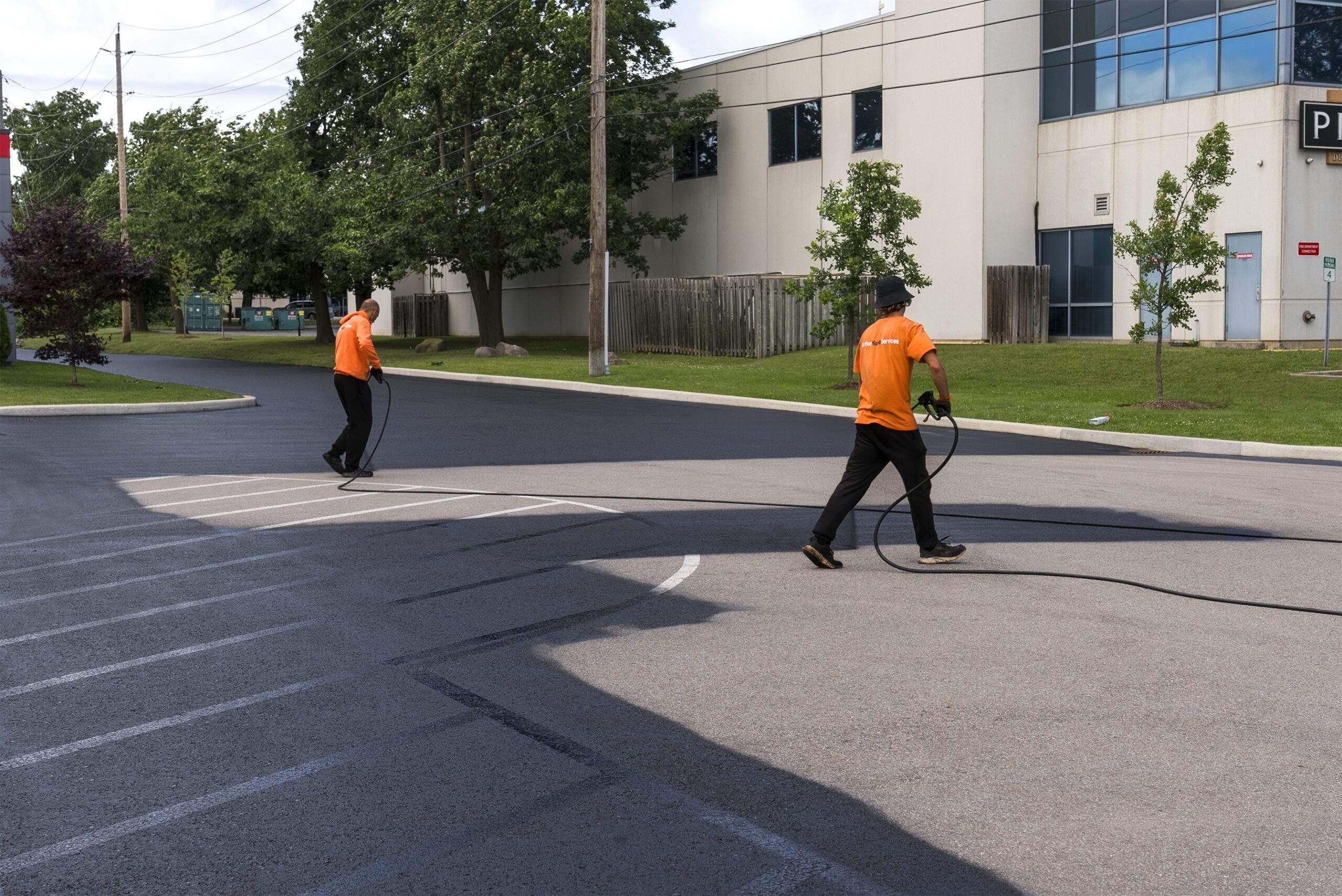
Every spring, property owners across Richmond Hill, Vaughan, Thornhill, Markham, and the Greater Toronto Area begin noticing the same problems. Parking lots look worn after winter, driveway cracks appear larger, and sections of asphalt that seemed stable in the fall suddenly begin showing signs of deterioration.
Many people assume summer is the time to start thinking about asphalt maintenance. In reality, the best time to schedule sealcoating and crack filling is much earlier.
By the time peak summer arrives, contractor schedules are often fully booked, temperatures are higher, and existing damage has already progressed further. What could have been handled with preventative maintenance in spring often turns into larger and more expensive repair work later in the season.
Booking spring asphalt services early helps protect pavement before damage spreads and gives property owners better control over long-term maintenance costs.
Why does winter cause so much asphalt damage in Ontario?
Ontario winters are extremely hard on asphalt surfaces. Moisture enters small cracks throughout the colder months and freezes beneath the pavement. As temperatures rise and fall repeatedly, the asphalt expands and contracts under pressure.
This freeze-thaw cycle slowly weakens the pavement structure.
By spring, many commercial parking lots and residential driveways begin showing visible signs of stress. Cracks widen, asphalt loses its darker finish, and weaker areas start breaking apart under traffic.
The issue is not just cosmetic. Once moisture reaches the base layer below the surface, the structural condition of the pavement begins deteriorating as well. If this process continues unchecked, potholes and larger failures become much more likely during summer.
This is why spring maintenance matters so much in areas like Richmond Hill and the GTA. The earlier asphalt problems are addressed, the easier they are to control.
Why should asphalt maintenance be scheduled early in spring?
Spring creates a short but important maintenance window for asphalt surfaces.
After winter damage becomes visible, the pavement is exposed to spring rainfall, rising temperatures, and increased vehicle traffic. If cracks and weak spots are left untreated, deterioration accelerates quickly.
Many property owners wait until late spring or summer to start planning maintenance. The problem with this approach is that asphalt companies are already entering their busiest period by then. Commercial property managers, condo boards, retail plazas, industrial facilities, and homeowners all begin scheduling projects at the same time.
As demand increases, availability becomes more limited.
Scheduling asphalt services early gives property owners more flexibility and reduces the risk of delays during peak season. It also allows maintenance work to be completed before summer heat and heavy traffic create additional stress on the pavement.
How does crack filling help prevent larger asphalt repairs?
Cracks are usually the first visible sign that asphalt is beginning to fail.
Once the surface opens up, water begins moving below the pavement structure. Over time, the foundation weakens and the asphalt loses support from underneath. This eventually leads to potholes, uneven surfaces, and larger areas of deterioration.
Crack filling is designed to stop this process early.
Hot rubber crack filling seals vulnerable openings before moisture can spread deeper into the pavement. It helps stabilize the surface and slows the deterioration cycle significantly.
For commercial parking lots and residential driveways throughout the GTA, crack filling remains one of the most cost-effective maintenance services available because it addresses problems before they become structural repairs.
Why is sealcoating important after winter?
Sealcoating does far more than improve the appearance of asphalt.
Its primary purpose is protection. Asphalt surfaces are constantly exposed to sunlight, moisture, road salt, oil, chemicals, and traffic wear. Over time, this exposure dries out the pavement and increases the likelihood of cracking and surface breakdown.
A properly applied sealcoat creates a protective barrier between the asphalt and these damaging elements.
In Ontario, where pavement is exposed to harsh winters followed by hot summers, this protection becomes especially important. Sealcoating helps reduce moisture penetration, slows oxidation caused by UV exposure, and improves the overall lifespan of the asphalt surface.
For commercial properties, sealcoating also creates a cleaner and more professional-looking parking lot heading into the busy spring and summer seasons.
What happens if asphalt maintenance is delayed until peak summer?
Delaying asphalt maintenance almost always increases long-term costs.
Small cracks that appear manageable in spring often become larger and more unstable once summer heat arrives. Asphalt softens slightly during hotter temperatures, especially in high-traffic areas where vehicles are constantly braking, turning, and parking.
This added pressure accelerates deterioration.
What could have been handled through crack filling and sealcoating may eventually require:
- pothole repair
- asphalt patchwork
- larger surface restoration work
For commercial properties, delays can also create safety concerns and negatively affect the appearance of the site during the busiest part of the year.
Preventative maintenance is always more affordable than reacting to advanced pavement failure later.
Why do parking lots deteriorate faster during warmer months?
Many people associate asphalt damage only with winter, but summer creates its own problems.
Asphalt absorbs heat throughout the day. In large commercial parking lots across Vaughan, Thornhill, and Richmond Hill, surface temperatures can rise significantly during warmer months. This softens the asphalt slightly and increases stress in already weakened areas.
Vehicle traffic then adds pressure to the surface, especially near entrances, loading areas, storefront parking spaces, and turning lanes.
If cracks are already present, the damage spreads much faster under these conditions.
This is why spring maintenance is so important. It allows parking lots to be stabilized and protected before peak summer wear begins.
Why does line painting matter during spring asphalt maintenance?
Line painting is often completed alongside sealcoating because winter conditions wear down pavement markings significantly.
Snowplows, road salt, moisture, and constant traffic gradually fade parking lot striping throughout the colder months. By spring, many parking lots look disorganized and difficult to navigate.
Fresh line painting improves:
- traffic flow
- parking efficiency
- property appearance
For commercial properties, clear pavement markings also support accessibility requirements, fire routes, loading zones, and pedestrian safety.
When paired with sealcoating, fresh striping helps restore both the appearance and functionality of the parking lot heading into the busiest season of the year.
How does spring weather affect asphalt maintenance quality?
Weather conditions directly impact how well asphalt maintenance materials perform.
Sealcoating and crack filling require stable temperatures and dry surface conditions to cure properly. Spring and early summer generally provide the best balance for these conditions throughout Ontario.
However, spring weather can also be unpredictable. Rainfall and overnight temperature drops may reduce available working days during busy periods.
This is another reason early scheduling matters. Booking ahead gives contractors more flexibility to complete projects during proper weather conditions rather than rushing work during limited availability.
What should property managers inspect after winter?
Spring inspections help identify asphalt problems before they become larger structural repairs.
Commercial property managers should pay close attention to entrances, drive lanes, catch basin areas, storefront parking sections, and loading zones. These are usually the first areas to show wear after winter because they experience the highest traffic pressure throughout the year.
Signs that maintenance may already be needed include fading pavement, widening cracks, standing water after rain, rough surfaces, and loose asphalt along edges or heavily used sections.
Addressing these issues early helps reduce long-term repair costs and allows maintenance work to remain preventative instead of reactive.
Do residential driveways benefit from spring maintenance too?
Absolutely.
Residential driveways experience many of the same problems as commercial parking lots, especially after Ontario winters. Cracks often widen during freeze-thaw cycles, while moisture and sunlight gradually weaken the surface over time.
Homeowners frequently notice surface fading, edge cracking, and rough areas appearing by spring.
Driveway sealcoating and crack filling help protect the surface before summer heat and rainfall create additional deterioration. They also improve curb appeal and help delay the need for more expensive repairs or replacement later.
For homeowners, spring maintenance is one of the most practical ways to extend driveway lifespan.
Why is preventative maintenance more cost-effective than repairs?
Preventative asphalt maintenance focuses on protecting stable pavement before structural failure develops.
Services like sealcoating and crack filling cost significantly less than large repair projects because they stop damage early rather than rebuilding failed sections later.
Once potholes form or the base layer begins deteriorating, repairs become far more labor-intensive and expensive. In severe cases, sections of asphalt may need complete removal and replacement.
For both commercial property managers and homeowners, consistent maintenance helps spread costs more predictably over time while reducing the likelihood of unexpected repairs.
When is the best time to book spring asphalt services?
The best time to schedule spring asphalt work is before demand reaches peak season levels.
Ideally, inspections and maintenance planning should begin early in spring so projects can be completed before contractor availability becomes limited.
By late spring and summer, schedules tighten quickly across the GTA. Waiting too long often means dealing with additional pavement deterioration while trying to secure limited scheduling openings.
Early planning helps property owners protect asphalt at the right time and avoid unnecessary repair costs later in the year.
Frequently Asked Questions About Spring Asphalt Maintenance
How often should parking lots be sealcoated?
Most parking lots benefit from sealcoating every 2 to 3 years depending on traffic levels, weather exposure, and pavement condition.
Should crack filling always be completed before sealcoating?
Yes. Crack filling helps prevent moisture from entering below the surface and improves the effectiveness of sealcoating.
Why does asphalt deteriorate faster after winter?
Freeze-thaw cycles weaken the pavement structure by allowing moisture to expand beneath the surface repeatedly throughout colder months.
Is spring the best time for asphalt maintenance in Ontario?
Yes. Spring and early summer provide ideal conditions for crack filling, sealcoating, and line painting before summer heat and traffic increase surface stress.
What happens if asphalt maintenance is delayed too long?
Cracks spread, moisture penetrates deeper into the pavement, and repair costs increase significantly over time.