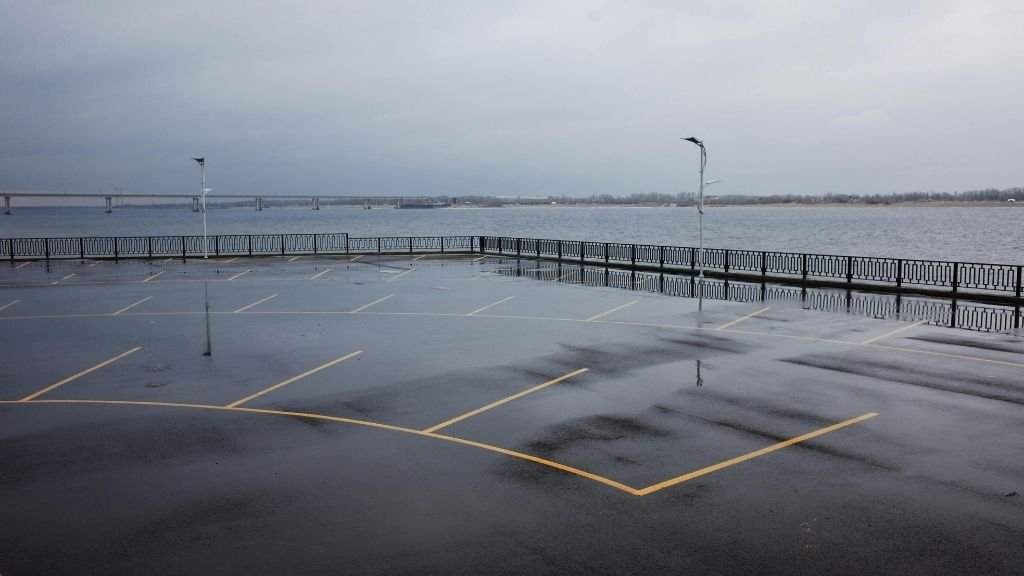
Standing water is one of the most reliable predictors of early pavement failure, and most property owners don’t connect the two until the damage has already spread well past the original source. A catch basin that drains slowly, a low spot where runoff collects after every rain, a crack along a curb line that channels water underneath the surface layer: each of these is doing structural damage that won’t become fully visible until the spring thaw reveals what freeze season did to the base beneath.
Ontario’s climate makes drainage a higher-stakes issue than it is in milder regions. The freeze-thaw cycle is not just cold weather. It is a mechanical process that uses water as the instrument. Every litre of water sitting on or beneath an asphalt surface in late October is a potential source of damage by February. Getting drainage right before freeze season is not optional maintenance. It is the foundation that every other fall treatment depends on.
In this article:
- Why Drainage Failure and Asphalt Failure Are the Same Problem
- How Catch Basins Work and Where They Break Down
- Signs Your Drainage System Is Compromising Your Pavement
- What to Inspect Before the Ground Freezes
- The Repair Sequence That Actually Works
- A Word on What Sealcoating Cannot Fix
- Schedule Your Pre-Freeze Drainage Assessment
Why Drainage Failure and Asphalt Failure Are the Same Problem
Asphalt pavement is a layered system. The surface layer handles traffic load and weather exposure. Below it, the base layer and sub-base provide structural support. Below those, the subgrade soil holds everything up. Every layer depends on adequate drainage to maintain its load-bearing capacity.
When water infiltrates the base layer and stays there, it softens the material. Load that the base could handle when dry becomes too much when the base is saturated. This is why pavement fails under traffic in ways that have nothing to do with the surface condition. A parking lot can look intact and be structurally compromised at the base because of a drainage issue that never got addressed.
Freeze-thaw compounds this. Saturated base material that freezes expands. When it thaws, it contracts and shifts. Repeat this over a winter with many freeze-thaw cycles and the base no longer resembles the compacted, load-bearing layer it was when the lot was paved. The surface above it cracks, settles, and eventually fails. And the root cause is almost never visible in the pavement itself. It is in the drainage system that was supposed to keep water out.
How Catch Basins Work and Where They Break Down
A catch basin is a below-grade inlet, typically positioned at a low point in a paved surface, designed to collect surface runoff and direct it into the storm drainage system. At its simplest, it is a grated opening in the pavement connected to a pipe that carries water away from the lot.
When catch basins work as intended, they keep surface water moving. When they fail, water backs up, spreads across the lot surface, and finds the path of least resistance into the pavement structure. There are several ways they break down:
- Debris accumulation: Leaves, gravel, and sediment collect in the basin and around the grate over time, restricting flow. This is the most common cause of slow drainage and the easiest to address.
- Grate damage or displacement: A damaged, cracked, or missing grate creates a hazard and allows larger debris to enter the basin and block the outlet pipe.
- Settlement around the casting: The asphalt or concrete surrounding the catch basin frame can settle independently of the basin itself, creating a lip or depression that concentrates water and vehicle impact at the joint. This joint is frequently the first point of pavement failure around a basin.
- Pipe blockage or damage: The outlet pipe can become blocked with accumulated debris, root intrusion, or sediment, backing water up into the basin and reducing its effective capacity.
- Structural deterioration of the basin itself: Older catch basins, particularly those with brick or mortar construction, can develop cracks, joint failures, or collapsed walls that compromise their function.
Each of these failure modes has a different repair path. Knowing which one you are dealing with requires an inspection, not an assumption.
Signs Your Drainage System Is Compromising Your Pavement
Most drainage problems announce themselves before freeze season if you know what to look for. A site walk after a moderate rain is one of the most useful diagnostic tools available for free.
Look for these indicators:
- Water that pools in the same locations after every rain, particularly if it takes longer than expected to clear
- A ring of dark, stained asphalt surrounding a catch basin, which indicates water is consistently overflowing or backing up around the inlet
- Pavement settlement, cracking, or soft spots within a few metres of a catch basin or along a drainage swale
- Visible gaps or lips where the pavement meets the catch basin casting
- Grates that sit below the surrounding pavement surface, creating a bowl effect that concentrates water
- Areas where snow or ice persists on the pavement longer than the surrounding lot in early winter, which can indicate water is migrating up through base layers
Any of these conditions, identified in September or October, can be addressed before freeze season. Identified in March, they become repair projects rather than prevention items, and the scope is typically larger.
What to Inspect Before the Ground Freezes
A structured pre-freeze inspection of catch basins and drainage infrastructure does not require specialized equipment. It does require a methodical approach.
At each catch basin on the property:
- Clear surface debris from the grate and surrounding pavement. This takes a few minutes and immediately improves flow capacity.
- Check the grate condition. Look for cracking, missing bars, or displacement from the frame. A grate that has shifted even slightly can be a vehicle hazard and a debris entry point.
- Inspect the casting and surround. Run your hand or a straight edge across the joint between the casting and the surrounding pavement. Any gap, settlement, or raised edge indicates a condition that will worsen over winter.
- Check the basin interior. Look down into the basin with a light. Note the depth of sediment accumulation at the bottom, any visible cracking in the walls, and the condition of the outlet opening.
- Run water into the basin if conditions allow. A slow draw-down indicates restriction somewhere in the system. Fast, clear drainage suggests the outlet is open.
- Walk the drainage swales and low points across the property. Confirm that surface water has a clear, unobstructed path to the nearest inlet.
For commercial properties with multiple basins or complex drainage layouts, a professional inspection will cover these items systematically and document conditions for your maintenance records.
The Repair Sequence That Actually Works
One of the most common mistakes in catch basin maintenance is addressing the visible symptom without following it back to the cause. Patching the pavement around a catch basin that still has a restricted outlet is a short-term fix. The water will continue to concentrate in the same location, and the new patch will fail for the same reason the old surface did.
The sequence that produces durable results is:
First, confirm the drainage system is functional. Clear debris, inspect the outlet, and address any structural issues inside the basin before touching the pavement around it. A basin that cannot drain properly will undo any surface work applied on top.
Second, address the casting and surround. If the pavement around the basin frame has settled, cracked, or separated, this section needs to be saw-cut, removed, and repaved with proper compaction. This is not a patching job. The casting area takes concentrated load from vehicle tires and concentrated water from the inlet, which means the compaction and material quality here matters more than almost anywhere else on the lot.
Third, handle any broader pavement damage that traces back to the drainage failure. Soft spots, alligator cracking, and depressions in the surrounding area may have developed because water was migrating out of an overflowing or leaking basin. Once the basin is functioning correctly, these areas can be evaluated for whether they need patching, base repair, or more extensive work.
Kyle Gryshchenko, who has been operating Action Paving Inc. across Ontario since 2019, has seen the same pattern on commercial lots repeatedly: the pavement around a catch basin gets patched every spring, fails again by fall, and the property manager is frustrated by what looks like a workmanship problem. In most of these cases, the basin itself was never inspected. The patch fails because the cause was never fixed.
A Word on What Sealcoating Cannot Fix
This is worth stating plainly because it comes up often: sealcoating applied over a drainage problem does not protect pavement from drainage damage. It protects the surface from UV oxidation, light water infiltration, and road salt. It does not waterproof the base layer, fill structural voids, or compensate for water that is migrating beneath the pavement through a compromised base or a leaking basin.
A lot that has visible pooling, soft spots near drains, or alligator cracking in the vicinity of catch basins needs drainage work and structural repairs before sealcoating makes sense. Sealcoating a lot with active drainage failure is an aesthetic treatment applied over a structural problem, and the structural problem will continue to develop underneath it.
This does not mean sealcoating is not valuable. On a lot where drainage is sound and the surface is in good condition, fall sealcoating is one of the most cost-effective treatments available. The point is sequencing: drainage first, surface treatment after. Getting those reversed is one of the more expensive mistakes in asphalt maintenance.