By the time summer arrives, most parking lots have already been carrying damage for months.
Winter leaves behind more than visible cracks and faded pavement. Moisture weakens the asphalt structure below the surface, snow removal equipment creates surface wear, and repeated freeze-thaw cycles slowly break down the pavement long before temperatures begin rising again.
Once warmer weather and heavier traffic return, those small problems begin accelerating quickly.
For commercial properties, parking lot maintenance is not just about appearance. The condition of the asphalt affects traffic flow, safety, customer experience, drainage performance, and long-term operating costs. A neglected parking lot becomes harder and more expensive to maintain every season it is left untreated.
This is why spring and early summer are some of the most important periods for preventative asphalt maintenance.
Sealcoating, crack filling, and line painting help stabilize the surface after winter, protect it during peak traffic months, and reduce the likelihood of larger repairs later in the year.
Why Does Asphalt Damage Become Worse During Summer?
Many property owners associate asphalt deterioration with winter, but summer creates a different type of stress on pavement surfaces.
Asphalt absorbs and holds heat throughout the day. During hotter months, the surface becomes more flexible under pressure, especially in high-traffic areas where vehicles are constantly turning, braking, and stopping.
Commercial parking lots experience this wear first around:
- Entrances and exits
- Loading zones
- Storefront parking areas
Once the pavement has already been weakened by winter, summer traffic speeds up the deterioration process. Cracks widen faster, weaker sections begin shifting under vehicle weight, and small surface defects gradually become structural problems. Without preventative maintenance, the damage compounds throughout the busiest months of the year.
Why Is Spring the Best Time for Asphalt Maintenance?
Spring creates the ideal opportunity to address winter damage before peak traffic season begins.
After months of exposure to moisture, road salt, freezing temperatures, and snow removal equipment, asphalt surfaces are often left vulnerable heading into warmer weather. Addressing these issues early helps stop deterioration before the pavement is exposed to another full season of heat and traffic stress.
This is also the period when sealcoating and crack filling perform best. Stable temperatures and drier conditions allow materials to bond properly and cure more effectively.
The challenge is that contractor demand increases quickly once the season begins. Commercial plazas, industrial facilities, condo properties, retail sites, and office buildings all begin scheduling work at the same time. By late spring, availability often becomes limited as projects increase across the region.
Properties that schedule maintenance early usually have more flexibility and avoid the delays that come with peak-season demand.
How Does Sealcoating Protect Commercial Parking Lots?
Sealcoating acts as a protective layer between the asphalt surface and the elements that slowly break it down.
Over time, asphalt is exposed to:
- Moisture
- UV rays
- Vehicle fluids
- Oxidation
- Traffic wear
Without protection, the pavement gradually dries out, loses flexibility, and becomes more vulnerable to cracking and surface failure. Sealcoating helps slow this process significantly.
A properly maintained surface resists water penetration more effectively, handles temperature fluctuations better, and maintains a cleaner, darker appearance throughout the season. For commercial properties, this also improves the overall presentation of the site and creates a more professional appearance for customers and tenants.
Sealcoating should not be viewed as a cosmetic service alone. It is part of a long-term pavement preservation strategy designed to extend asphalt lifespan and reduce future repair costs.
Why Should Cracks Be Filled Before Summer Traffic Increases?
Cracks are one of the earliest warning signs that asphalt is beginning to weaken. Once openings form in the surface, water begins moving below the pavement structure. Over time, the base beneath the asphalt loses stability, especially in areas exposed to repeated traffic pressure.
Summer traffic then adds additional stress to those weakened sections. This is when small cracks often become:
- Potholes
- Surface separation
- Alligator cracking
- Unstable pavement areas
Crack filling helps stop this progression before larger structural repairs become necessary. By sealing vulnerable openings early, property owners reduce moisture penetration and help preserve the integrity of the pavement during peak traffic months.
For commercial parking lots, crack filling remains one of the most cost-effective maintenance services available because it addresses problems before they spread further across the surface.
Why Do Parking Lot Markings Matter More During Busy Seasons?
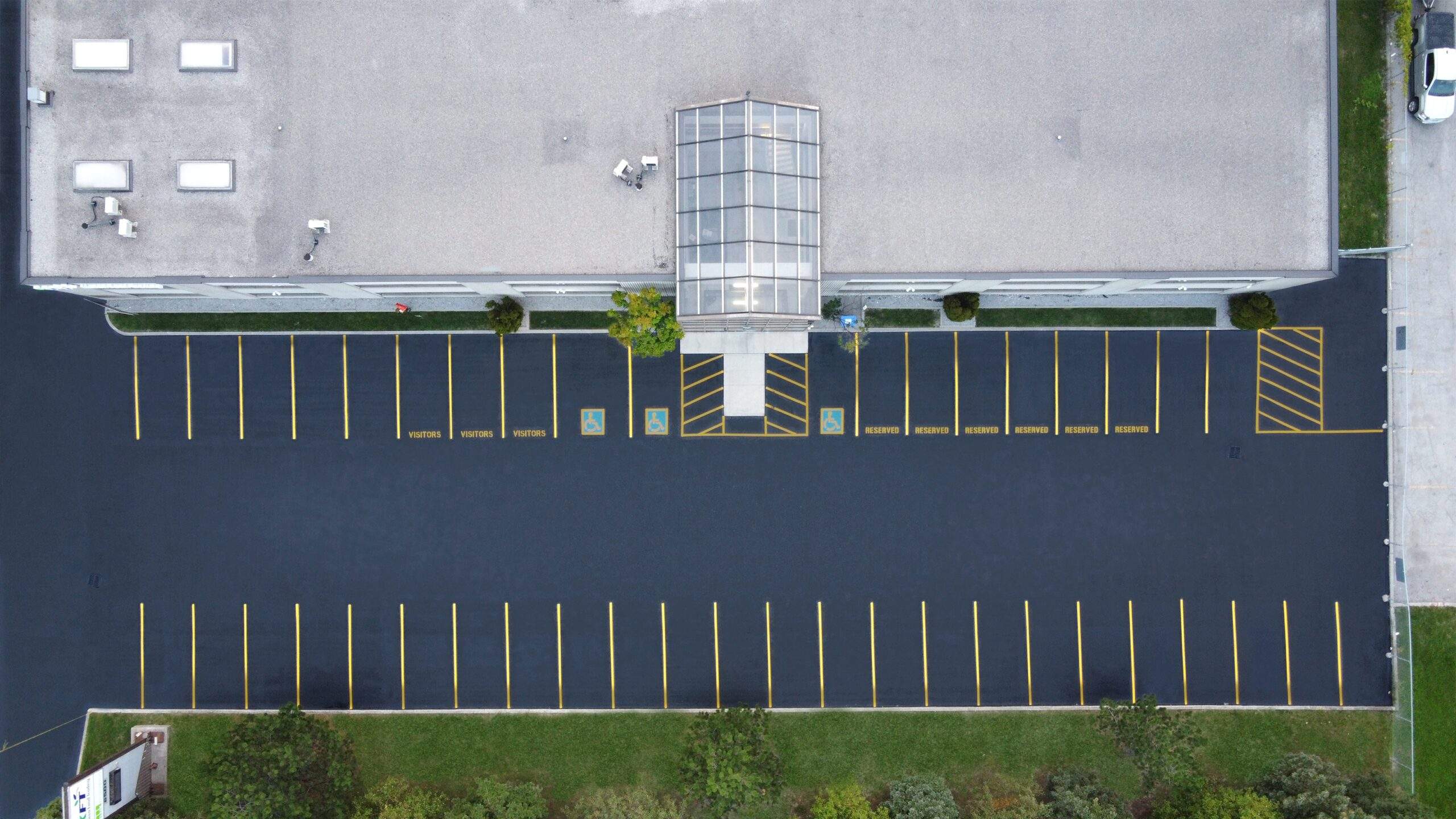
Line painting plays a larger role in parking lot performance than many property owners realize. After winter, pavement markings are often faded from snowplows, salt exposure, traffic wear, and harsh weather conditions. By spring, parking stalls, directional arrows, loading zones, and accessible spaces may no longer be clearly visible.
As traffic increases during summer, poor visibility creates confusion throughout the property. Fresh line painting improves:
- Traffic organization
- Parking efficiency
- Pedestrian safety
- Accessibility visibility
For commercial sites, clear markings also help maintain a cleaner and more organized appearance while reducing unnecessary traffic flow issues during busy periods. When paired with sealcoating, fresh striping restores both the appearance and functionality of the parking lot heading into summer.
How Does Water Continue Damaging Asphalt After Winter Ends?
One of the biggest misconceptions about asphalt damage is that problems stop once winter is over. In reality, moisture continues affecting the pavement throughout spring and summer.
When cracks remain untreated, rainfall moves below the surface and weakens the foundation underneath the asphalt. Over time, traffic pressure causes the surface to separate further and creates instability throughout the pavement structure.
Poor drainage makes this even worse. Water that pools near catch basins, entrances, or low sections of the parking lot gradually softens the surrounding asphalt and increases the likelihood of potholes and surface failure.
This is why spring inspections are so important. Identifying drainage issues early helps prevent repeated damage throughout the rest of the season.
What Should Property Managers Inspect After Winter?
The transition from winter into spring is the best time to evaluate overall pavement condition. Commercial property managers should pay close attention to areas that experience the highest traffic pressure throughout the year. Entrances, drive lanes, storefront parking sections, loading areas, and turning zones usually show the earliest signs of wear.
Some of the most common warning signs include spreading cracks, fading asphalt, loose surface material, uneven pavement sections, and standing water after rainfall.
Even small issues should not be ignored. In many cases, early deterioration spreads quickly once temperatures rise and vehicle traffic increases. Routine inspections help property owners identify maintenance needs before larger repairs become necessary.
Why Do Commercial Parking Lots Deteriorate Faster Than Residential Asphalt?
Commercial asphalt surfaces experience significantly more stress than residential driveways. Parking lots deal with continuous traffic throughout the day, including delivery vehicles, turning movements, braking pressure, and concentrated use near entrances and storefronts. This repeated stress accelerates surface wear, especially once the pavement structure has already been weakened by seasonal conditions.
Commercial properties also face additional concerns related to:
- Liability
- Customer experience
- Traffic organization
- Accessibility compliance
Because of this, maintenance planning becomes far more important for commercial asphalt surfaces. Regular sealcoating, crack filling, and line painting help commercial properties maintain safer and more functional parking areas while reducing long-term repair expenses.
Why Does Delaying Maintenance Usually Increase Costs?
One of the most common mistakes property owners make is postponing preventative maintenance because the damage appears manageable. The problem is that asphalt deterioration rarely stays isolated.
Once cracks allow moisture below the surface, structural weakening continues regardless of whether the damage is immediately visible. By the time potholes and surface failures become obvious, repairs are often far more extensive than they would have been earlier in the season.
What could have been controlled through routine maintenance gradually becomes larger restoration work. Preventative services like sealcoating and crack filling cost significantly less than major asphalt repairs because they focus on preserving stable pavement rather than rebuilding failed sections.
For commercial properties managing long-term budgets, maintaining asphalt consistently is almost always more cost-effective than reacting to advanced damage later.
Why Does Timing Matter So Much for Asphalt Maintenance?
Asphalt maintenance depends heavily on weather conditions and seasonal demand. Sealcoating and crack filling require stable temperatures and dry conditions to cure properly. Spring and early summer typically provide the best working conditions before peak heat and heavy traffic create additional surface stress.
At the same time, this is also when demand for asphalt services increases the fastest. By late spring, many contractors are already managing heavy schedules across commercial and industrial properties. Waiting too long often results in:
- Limited availability
- Delayed project timelines
- Worsening pavement conditions
Early planning gives property owners better scheduling flexibility and allows maintenance work to be completed before summer traffic reaches its highest levels.
What Are the Signs Your Parking Lot Needs Maintenance Now?
Parking lots usually show clear warning signs before larger structural problems develop. Visible cracking, faded pavement color, rough surface texture, standing water, loose asphalt, and worn parking lot markings are all indicators that the pavement is beginning to deteriorate.
These issues rarely improve on their own. Addressing them early helps stabilize the surface, improve appearance, and reduce the likelihood of larger repair costs later in the season.
Frequently Asked Questions About Summer Asphalt Maintenance
How long does sealcoating typically last?
Most commercial parking lots require sealcoating every 2 to 3 years depending on traffic volume, weather exposure, and pavement condition.
Should crack filling always be completed before sealcoating?
Yes. Crack filling helps prevent moisture from entering below the pavement and improves the effectiveness of the sealcoating process.
Why is spring the best time for parking lot maintenance?
Spring allows property owners to address winter damage before summer traffic and heat accelerate pavement deterioration further.
Can line painting be completed without sealcoating?
Yes, but line painting is usually more effective after sealcoating because the surface is cleaner, darker, and easier for markings to adhere to properly.